Una San Andrés sostenible
Publication, 2019
Publication, 2019
Universidad de los Andes' Design Masters program wanted to teach systemic design through a real place instead of a classroom brief. San Andrés, a 27 km² Colombian Caribbean island in the Seaflower Biosphere Reserve, was straining under water scarcity, poor solid-waste handling, diesel-dependent energy, and a Creole culture under pressure from tourism. The island logged 918,231 visitors in 2016, a 173% jump from 2013, on a water network that loses over 68% of what it carries.
Students and professors traveled to San Andrés and worked directly with local community guides, researching water, solid waste, energy, and art/culture/tourism as interconnected systems over five intensive field days. That work grew into a "seedbed" of design visions, four of which matured into full concepts. I authored one of them, Cunu Platform, a creative-industries platform connecting Raizal artists and artisans with sustainable materials (seaweed paper, recycled-vinyl printing, reused-cloth packaging) to publish and circulate San Andrés Creole music, literature, and craft, and wrote the accompanying travel essay "Following the Thread."
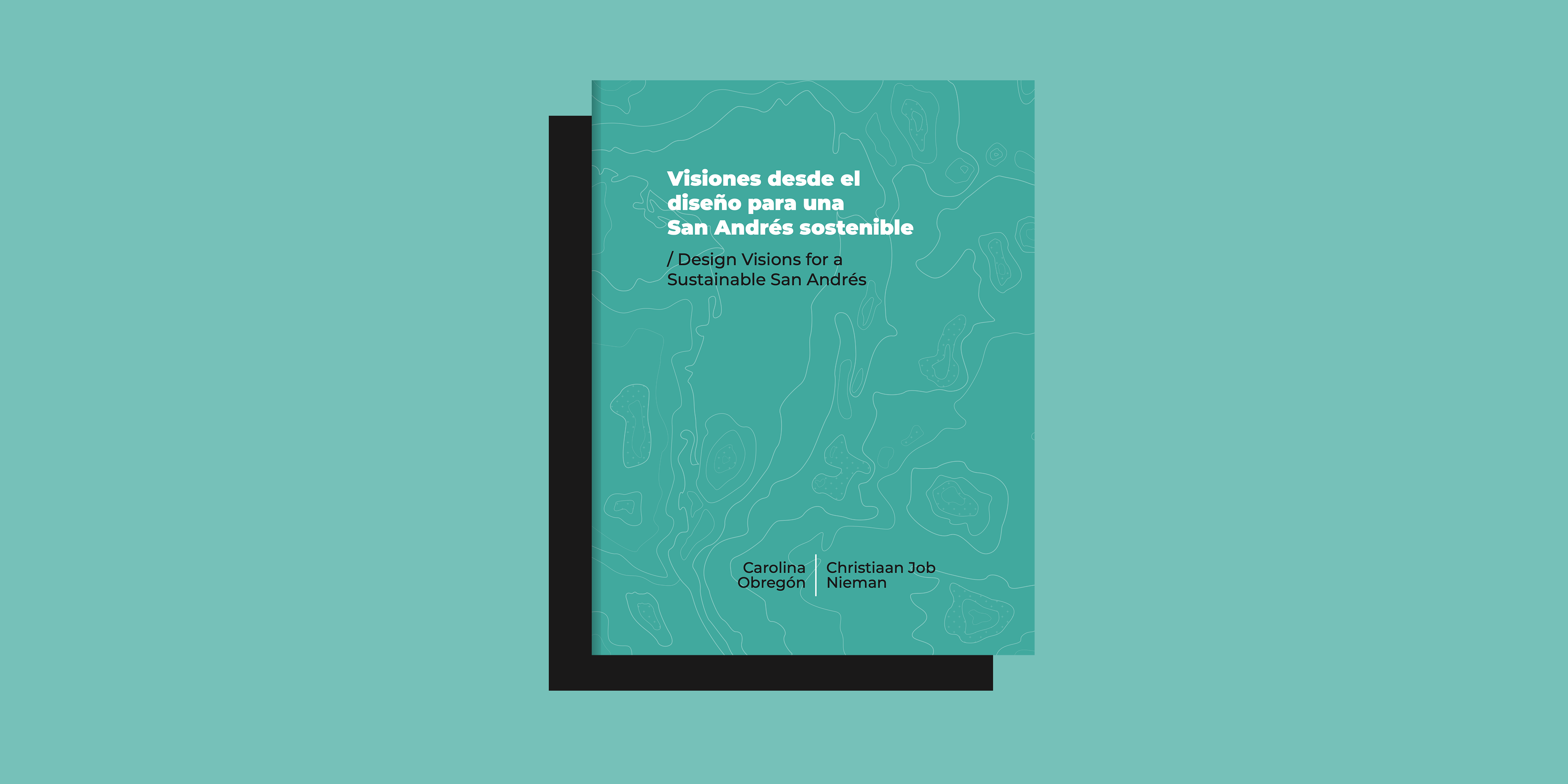
The research became "Visiones desde el diseño para una San Andrés sostenible / Design Visions for a Sustainable San Andrés," a 175-page bilingual book published by Ediciones Uniandes (2020) in the Faculty of Architecture and Design's "How We Do It?" teaching series (ISBN 978-958-774-775-1). As an academic publication rather than a product launch, its success isn't a usage metric. It's that a single studio course became a lasting, citable resource for San Andrés' community, design students, and practitioners, credited to eight student co-authors and two editor-professors.